

Blogs
-
From Cape Town to Cape Cod: Kingdom of Earth at the Provincetown Theater
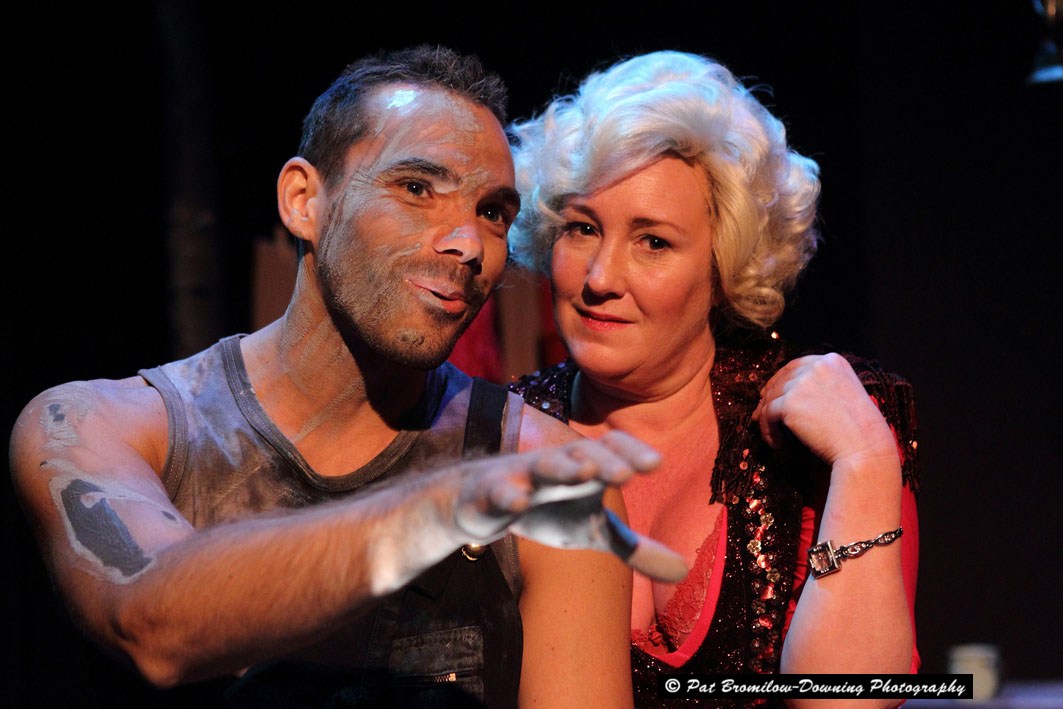
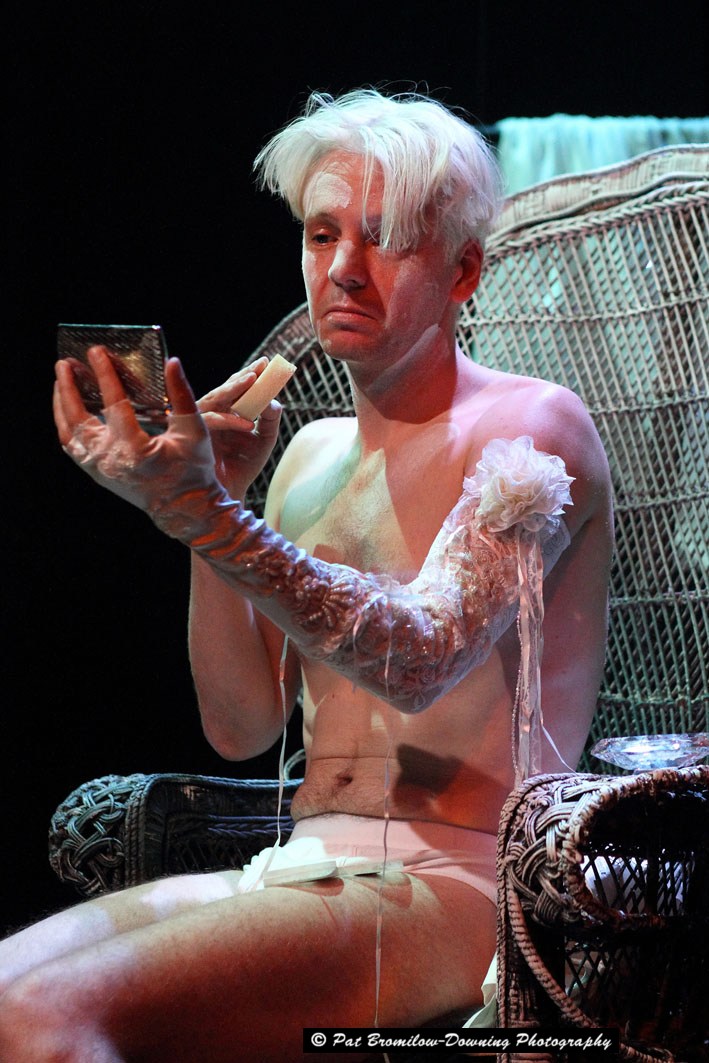
Posted: September 23rd 2013 @11:22 AM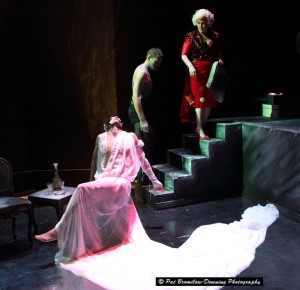 One of Tennessee Williams’ lesser-known plays, Kingdom of Earth is a powerful indictment of racism, classism, and a whole bunch of other -isms, while maintaining the playwright’s keen ability to stay just this side of caricature in his characters. And you can see it right now at the Provincetown Theater, thanks to South Africa’s Abrahamse-Meyer Productions, who brought it here last year as part of the Tennessee Williams Festival and are presenting it again in a longer run this year.
So: the story. As reviewed by Lawrence Bommer,
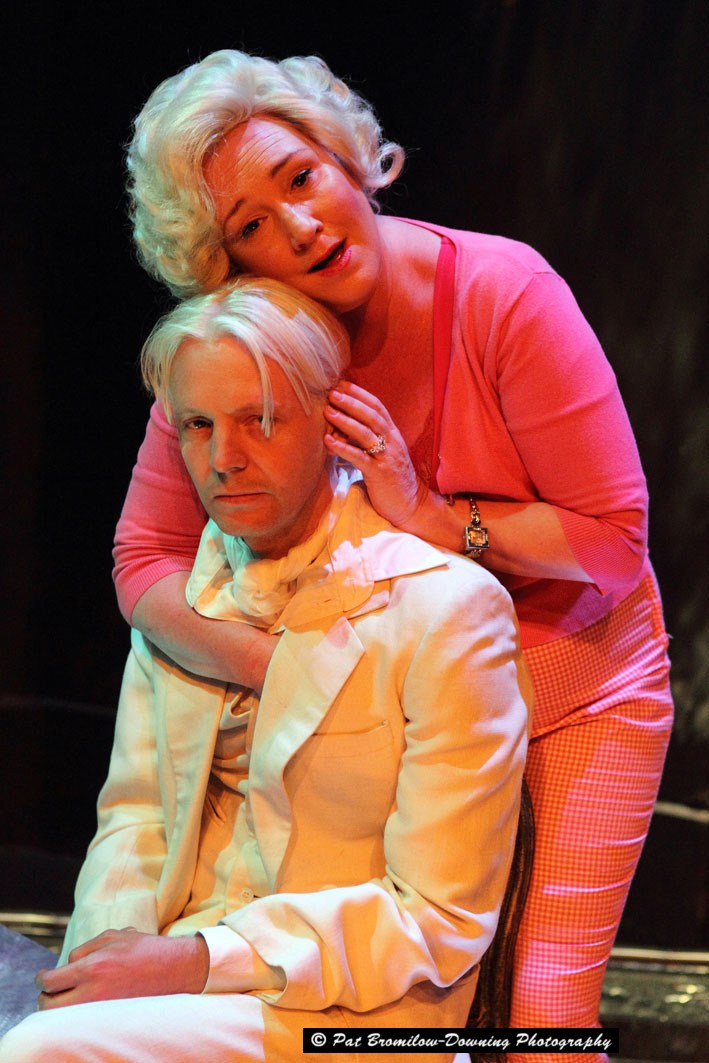
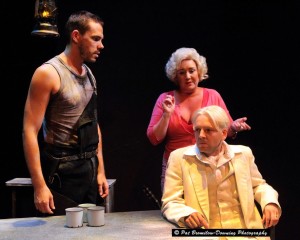 Though the playwright put parts of himself in all his great characters (most notably Blanche DuBois, Brick Pollitt, and Tom Wingfield), he must have been at his most masochistic when he imagined himself as Lot Ravenstock, a self-described “impotent, one-legged sissy with one foot in the grave.” Lot is dying of TB and desperate to cling to any legacy–if not a child of his own, then the land he grew up on. But death threatens (or promises) to take it away. Haunted by the memory of his dead mother, the only woman he’s loved, Lot naively believes that female devotion will free him of his fears. The woman he hopes will provide that loyalty is Myrtle, a blowsy show girl he married two days before, after meeting her on the set of a TV show: she was being crowned “Queen for a Day.”
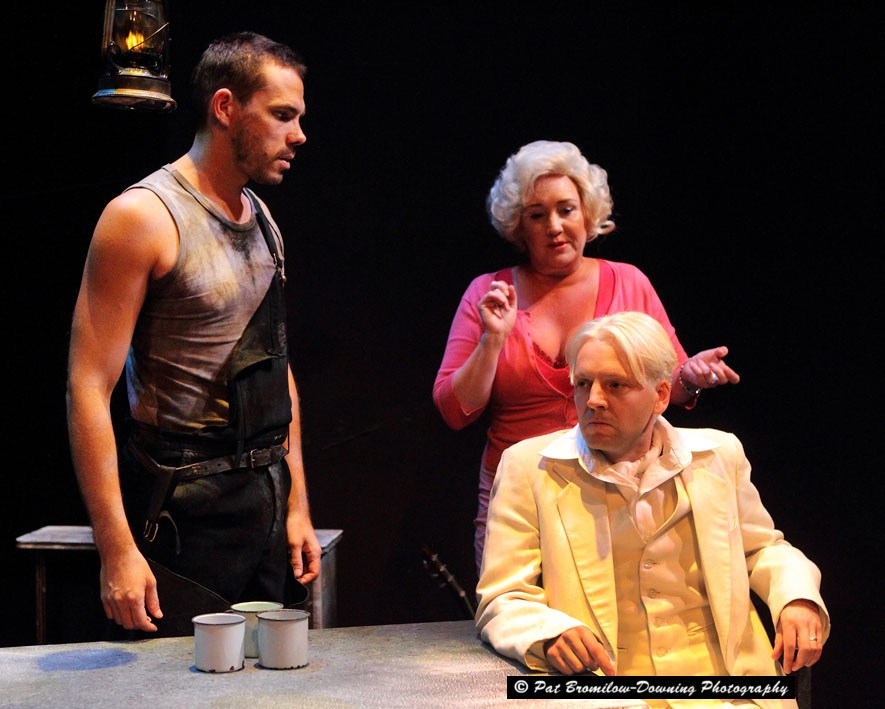
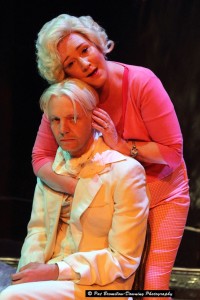 He returns with his bride–it’s 1960–to his family’s Mississippi farm just as it’s about to be flooded: heavy symbolism here of the destruction that precedes fecundity and renewal. Lot wants Myrtle to inherit the estate, but the land already has an owner–Chicken, Lot’s half-brother, a brutal loner who’s part black and all fury. Chicken holds a will Lot signed when he was desperate for someone to tend the land after his mother died. Lot wants Myrtle to destroy the agreement so she can take the property (a plot device he’s unashamedly borrowed from A Streetcar Named Desire and Cat on a Hot Tin Roof).
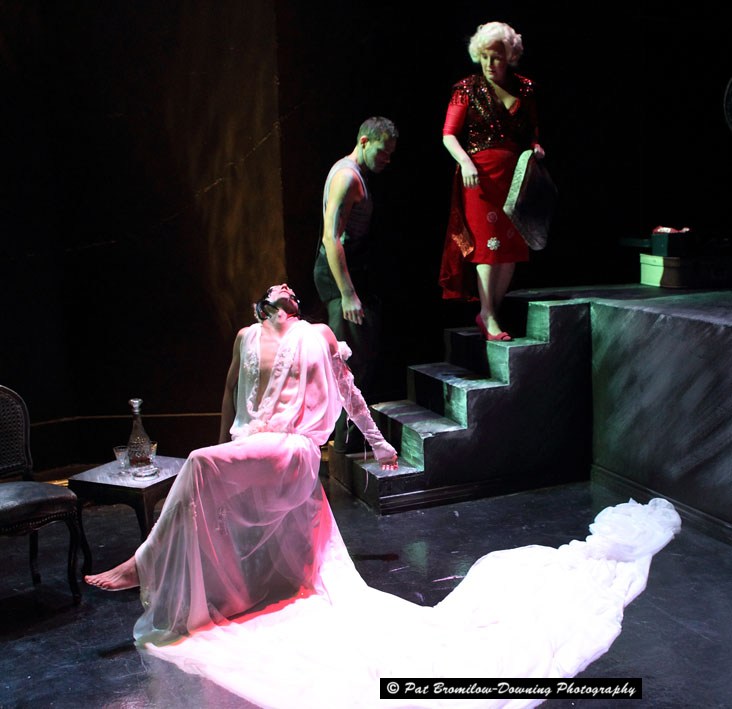
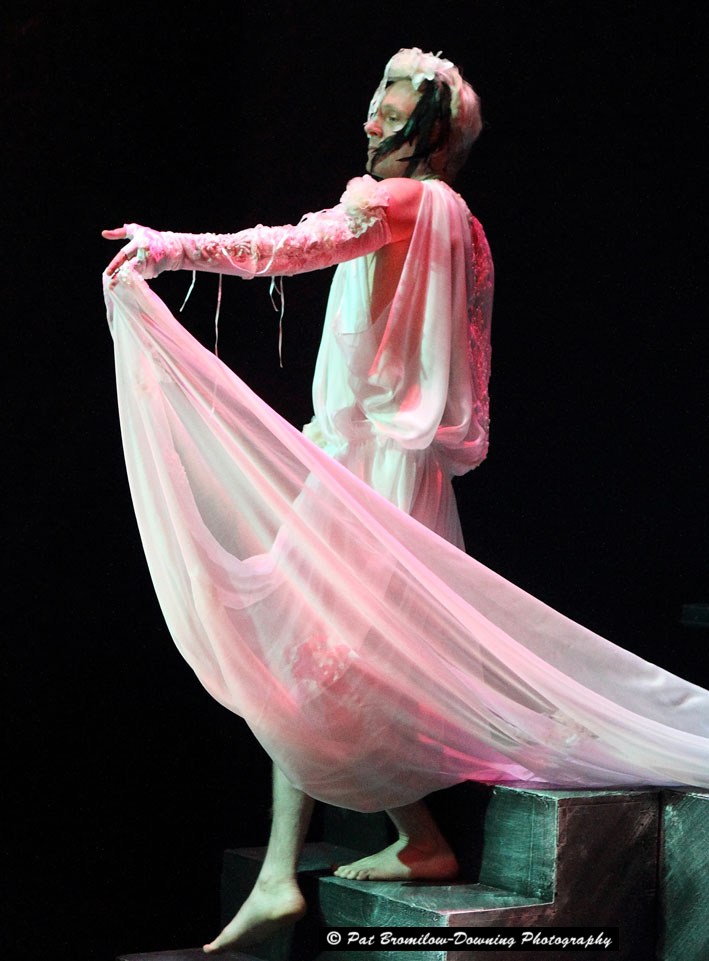
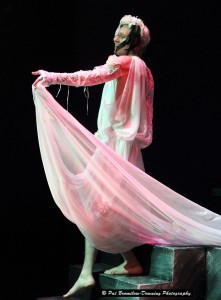
Predictably, Chicken will own not only the home but Myrtle. Weak and helpless, Lot self-destructs in his death chamber upstairs (summoning just enough energy to don his mother’s clothes, Psycho-style) while Myrtle succumbs to the attractions of muscular, loutish Chicken–who also promises to save her from the flood. Finally, in the play’s rhapsodic conclusion, Chicken praises the power of a man’s love for a woman. After making Myrtle promise to breed him a son, he takes her to the roof as the music swells in triumph.
 Well, okay. That’s the essence, sure, but Bommer is obviously missing a lot of the nuances of Williams’ play, which certainly cannot be said about the Abrahamse-Meyer Productions’ version that we’re seeing in Provincetown.
Director Fred Abrahamse is very clear about what lies beneath Lot’s obsessions and Chicken’s ultimate triumph: the reason, perhaps, that it took a South African production to help American audiences understand the play is because the two countries have so much in common. “There is a close connection to deep-seated racism,” he explains. “That’s our connection to the play. We’ve all grown up with it.”
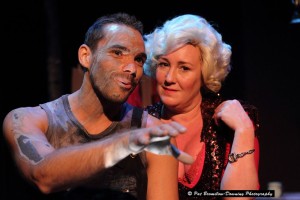 Actor Marcel Meyer—who plays Chicken—agrees. “It’s very dark, but the end is positive,” he says. “The flood will purge the land and the old racism—represented by Lot and his mother—has to die so that the new multiracial family can start with Chicken and Myrtle and a new order can come after the flood has purged the land, and I think it’s happened in ’94 in South Africa when Mandela was freed, and how far our countries have come … this is our play, we know these people.” Director Abrahamse nods. “I mean, you go into the middle of South Africa, you could be in Mississippi almost, it’s the same kind of feeling.”
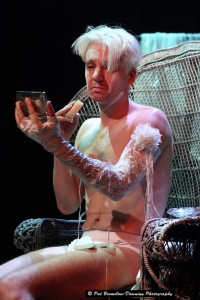 But what about the—um—accents? Actor Nicholas Dallas, who plays Lot, took a straightforward approach: “I watched Midnight in the Garden of Good and Evil and just practiced being Kevin Spacey!” he laughs.
It is a powerful play being given an extraordinarily powerful production and one of the true highlights of this year’s festival. Make sure you get over to the Provincetown Theater to see it.
Kingdom of Earth continues at the Provincetown Theater throughout the Tennessee Williams Festival; tickets are available online at provincetowntheater.org.
-
The Latest Thinking on Garbage: You can’t just think outside the box…you have to recycle the box
Posted: September 13th 2013 @5:03 PM I don’t have to tell you how much garbage is in the news lately since the deadline is approaching that will force every town on Cape Cod to renew its contract with SEAMASS, the facility over the bridge that burns our trash and turns it into energy. Costs are expected to double or even triple. The Cape, of course, is not alone. It’s said that American communities spend more on waste management than on fire protection, parks and recreation, libraries or schoolbooks.
 The good news is that the more it costs per ton to get rid of trash, the more we’re encouraged to decrease the number of tons of trash we get ride of. And to recycle the rest. The hottest new theory on how to encourage people to do that is Pay As You Throw, a system that’s already being used in about a hundred and forty Communities throughout the Commonwealth, some of them here on the Cape.
Here’s how it works: residents purchase a reduced rate dump sticker as well as town-issued trash bags. These bags are the only ones accepted at the landfill. Recycling is free. You pay only for what you throw away.
There are some objections. The first is that people will be encouraged to save money by throwing stuff away in the woods. The truth is most towns have not seen an increase in illegal dumping. Probably because all people realize all those old catalogs they throw away can be traced back to them. Maybe because there’s almost nothing you can’t get rid of at the swap shop.
Some people say that large families are penalized by Pay As You Throw because they have more people, and therefore more garbage.
But others ask if it’s been fair all these years for a retired couple with a pet poodle who visits the dump with two bags of trash a week to subside the garbage truck driven in by the Brady Bunch.
 When it comes to families with small children, diapers are frequently mentioned. Well, there are companies that create fuel from dirty diapers, both baby diapers and … the other kind. They’re simply deposited into a machine that “pulverizes, desiccates, sterilizes, and then reduces them into a bacteria free, odorless, pellet that can be used in biomass boilers or heating systems.
The fact that these companies are in Canada and Japan only means there’s an opportunity brewing here on the Cape. It’s well to remember that the first woman billionaire in China came to America as a penniless immigrant. Understanding that her native country suffered a vast shortage of paper, she went all over the Los Angeles area in an old Chevy van collecting used paper and shipping it back to China. I only wish I knew when I was a kid that I could have made more money picking up old newspapers than delivering them.
Doing my research on diapers I discovered some information on another tricky subject, pet poop. Did you know that in some countries manure is used as furniture polish? It’s smeared by hand onto a table and polished to a high shine. They say that when dry, the dung has no odor at all. Do you have dogs or cats? Me, too. But I haven’t tried this yet so why don’t you let me know how it goes for you.
Most landfills have a Salvation Army bin for clothes but there are people, myself included, who still think they may someday be able to fit into their jeans from college and are reluctant to throw them away.
 No problem. Just stuff them into plastic mesh modular units that are designed to be strapped together to form furniture. It’s called the Fill-it furniture system. L-shaped couches, easy chairs, ottomans. How about making a slip-cover with the old velvet drapes?
But the most cutting edge technology I’ve discovered goes way beyond Pay As You Throw. It’s DNA storage. You heard me. Right now at Harvard and Stanford they are storing archival media in molecules of life. They convert information into digital code first and then into the DNA alphabet and then use those sequences to construct genetic material. According to one scientist, it’s compact, lightweight and can potentially remain intact for thousands of years if stored in a dark cool environment. Imagine the contents all your books, CD’s, and file cabinets in a piece of fruit cake.
So just remember, when it comes to saving the environment its not enough to think outside the box. You have to recycle the box.
I’m Ira Wood…and that’s my opinion.
Matters of Opinion are Ira Wood’s short, personal, often rather odd takes on current events. They wrap up the WOMR News on most Fridays at 12:30 PM and are available as podcasts HERE. Feel free to email Ira to tell him what you think.
-
The Nuclear Power Plant and Magical Thinking
Posted: September 13th 2013 @4:35 PMI have a habit most mornings when my smart phone sounds the wake-up alarm of reaching for my glasses, and going straight to the headlines in the email blast of the local newspaper. The most reliable headlines this summer were traffic accidents, at least one everyday, head-on crashes, cars mowing into storefronts, motorcycles careening into trees, truck roll-overs, an SUV in a pond.
Besides Dan Wolf’s problems with the Ethics Commission and the Red Sox, the only other predictable item in headlines was the Pilgrim Nuclear Power Station. We had the massive distribution of potassium iodide pills in case of a meltdown, a tripped breaker cutting off power to pumps that cooled the reactor, two senators writing a letter to urge Entergy to create an evacuation plan just in case, a Department of Defense-commissioned report citing Pilgrim as being one of eight plants in the nation that are vulnerable to an attack from the water, a survey indicating that a full half of all Cape residents would run for the bridges in the event of a nuclear accident, Entergy laying off workers at the plant… and that’s only August.
I do remember one nut ball defense of Pilgrim in an Op Ed piece, but with such an avalanche of bad press you have to wonder what in the world is keeping people complacent enough not to demand, by the thousands and with every tool at their disposal, that it be shut down.
All I can come up with to account for this complacency is what psychologists call magical thinking, which occurs when our hopes, fears, desires, prejudices, and beliefs take over our decision-making. It’s nothing to be ashamed of.
In fact, according to a recent book called The Seven Laws of Magical Thinking by Matthew Hutson, most of us not only believe in luck, mind over matter, destiny, karma, jinxes, the afterlife, and totally irrational ideas, but we engage in magical thinking on a daily basis.
Do you have any lucky objects, like a Brady jersey you wear during Patriots games? Do you believe that what goes around comes around? Do ever find yourself saying, “It was meant to be?” Do you knock on wood when you make a boastful statement like, “I really aced that interview?” None of those actions are rationally defendable but believe it or not, magical thinking has enabled humans to be an evolutionary successful species. It offers us a sense of control and a sense of meaning in an incomprehensible and frightening world.
Psychologists who have studied magical thinking have discovered that most of us would say we don’t believe in woo woo…but that almost all of us believe in a little bit of it.
Do you play the lottery? I would generally tell you I don’t, but whenever the TV news people start hyping those interstate mega-jackpots where the prize gets up to hundreds of millions of dollars, I have to confess, I go to the liquor store on Main Street and buy a ticket. Do I really believe I’ll win? Well, other people have, why not me, and besides, could I live with myself if the winner came from Wellfleet and I hadn’t bought a ticket?
The odds of winning Powerball are long, 1 in 175,000,000. Winning is pure wishful thinking, a lie I tell myself.
So what is the lie we tell ourselves in order to tolerate Pilgrim? Well, the Op Ed piece that made light of the danger cited the fact that it was a tsunami that caused Fukushima and we don’t have tsunami’s in the North Altlantic. We do, of course, have historically deadly hurricanes, and to deny their ability to level entire cities is a whopper.
 How about the belief that we’ll be okay if they develop an effective escape route? That’s another lie, one that Senators Markey and Warren seem to believe at the moment. Sure, some of us may be able to drive out of harm’s way but what about the land we love and call home? Just google Fukushima to see what Cape Cod might look like after a meltdown and if you really want to face the awful truth, Chernobyl.
And is it magical thinking to tell ourselves is that the United States government actually cares about our safety, our health, and this magnificent peninsula enjoyed by millions every year…that the Nuclear Regulatory Commission would not sacrifice us for the meager profit of a corporation?
I think that’s the biggest lie we tell ourselves…and the one that hurts the most.
I’m Ira Wood…and that’s my opinion.
Matters of Opinion are Ira Wood’s short, personal, often rather odd takes on current events. They wrap up the WOMR News on most Fridays at 12:30 PM and are available as podcasts HERE. Feel free to email Ira to tell him what you think.
-
Conspiracy theories…a valuable tool or political paranoia?
Posted: September 13th 2013 @3:49 PM September 11, 2013 marks the twelfth anniversary of the world trade center bombings, explosions that continue to echo around the world. While the most of us are content take stock of the causes and effects of the attack and lay blame on those who admitted responsibility, there are others for whom the case is still is open, who believe Osama Bin Laden’s planes were merely a noisy distraction and that the Trade Center buildings were actually wired to explode from the inside by mysterious plotters from—take your pick—the Bush White House, Israel’s Mossad, or a team of Black Ops from the CIA.
 November 22, 2013 is not only the fiftieth anniversary of the assassination of President John F. Kennedy but a marketing opportunity for a profusion of books, movies and docudramas, many of them rehashing the mafia/CIA connection, but some positing theories that are new to me, like Robert Kennedy covering up the purported fact that a bullet from a secret service man’s gun was found in his brother’s skull.
 More recent conspiracy theories involve the Boston Marathon bombings. Most of them are as implausible as the theory that the bombings, like the moon landings in 1968, were faked and staged by actors. Another one posits that the Tsarnaev brothers actually were CIA agents who were hired to infiltrate Muslim groups but betrayed their mission and went over to the radical Islamists. This one claims to answer the question of why an FBI agent shot and killed a friend of the Tsarnaevs in Florida during a routine FBI interview.
And that’s the enticing thing about conspiracy theories. They try to answer troubling questions and create rational narratives to explain things we just can’t get our heads around.
The historian William Manchester explained the Kennedy assassination theories this way: “If you put the murdered President of the United States on one side of a scale and that wretched waif Oswald on the other side, it doesn’t balance. You want to add something weightier to Oswald. It would invest the President’s death with meaning, endowing him with martyrdom. He would have died for something. . . . A conspiracy would, of course, do the job nicely.” Manchester, like Oswald, had been trained as a Marine sharpshooter and believed that Oswald was the lone triggerman.
Like Manchester, many of us think conspiracy theories are ridiculous—at least until they’re proven correct, such as the one that suggested a President of United States would actually conspire to cover up the fact that he sent goons to break in to the offices of his opponents.
Americans have always loved a juicy conspiracy, from Freemasons being responsible for the federal income tax to aliens being hidden at Roswell, New Mexico. When I was growing up there was a persistent rumor about Fluoride. The theory was that communists were putting it in public water supplies to control our minds. At the time nobody ever thought TV was contributing to mind control…that would have sounded ridiculous.
You would think that because there’s so much information on the internet today that wacky theories would be easily be disproved. Think again. According to a poll conducted by Farleigh Dickinson University, 63% of registered American voters believe in at least one political conspiracy theory and the internet increases the tendency to do so.
Turns out there’s something that political scientists called the ‘backfire effect.’ They say that the more you try to convince people their information is bad, the more they believe in bad information. It’s sort of like talking to your teenager. Conspiracy theorists like to hang out in places where people agree with them and their biases are confirmed. Places like chat rooms. And psychologists say that the more you believe in government conspiracies, the less likely you are to vote, or protest, or join a social change movement. The people who most embrace conspiracies are convinced that social change is hopeless.
So where does that leave the rest of us? Surely you don’t have to be a psychopathic loner babbling about the New World Order to believe that our so-called democratic process is being manipulated. Not at all. According to studies, being a little paranoid is a normal reaction to feeling politically powerless. In fact, there’s a correlation between conspiracy theorizing and strong support of democratic principles.
I actually think political paranoia can be valuable tool in the right doses. It keeps you sharp. It keeps you asking the right questions. Because, at least in the words of Thomas Pynchon, “If they can get you asking the wrong questions, they don’t have to worry about answers.”
I’m Ira Wood…and that’s my opinion.
Matters of Opinion are Ira Wood’s short, personal, often rather odd takes on current events. They wrap up the WOMR News on most Fridays at 12:30 PM and are available as podcasts HERE. Feel free to email Ira to tell him what you think.
-
Book Review: Art Held Hostage (John Anderson)
Posted: September 12th 2013 @7:33 PMPublishers frequently send me books to review, and sometimes one of them really stands out as a jewel… that’s the case for Art Held Hostage: The Battle Over The Barnes Collection. I remember the privilege of seeing the Barnes back when it was still housed in its original space–a phenomenal collection to be sure–and so I was particularly interested in hearing what had happened since then.
Albert Barnes made two fortunes, one in pharmaceuticals, the other in art, and it’s for his art collection that he’s remembered today–his collection when he died included 69 Cezannes (more than in all the museums in Paris combined!), 60 Matisses, 44 Picassos, 18 Rousseaus, 14 Modiglianis, and 180 Renoirs. He left his collection in the care of Lincoln University, the oldest historically black college in America. In 1989 (38 years after Barnes’ death) Lincoln gained majority control of the foundation board–and the plot thickened.
Philadelphia attorney Richard Glanton embroiled the Barnes in an ego-driven saga of legal wrangling and bitter infighting that kept the collection hostage. In 2002 the trustees announced their intention to move the collection into a new building… and the plot thickened even more.
This is a work of nonfiction that reads like a legal thriller, and I recommend it heartily. Check it out!
-
Cape Cod Festival of Arab and Middle Eastern Cinema
Posted: September 12th 2013 @7:00 PMAnd now for something completely different… this weekend, consider checking out the second annual Cape Cod Festival of Arab and Middle Eastern Cinema, which begins tonight with the Iranian-American film Jerry And Me at the Water’s Edge Cinema and continues on Friday and Saturday with five films from Saudi Arabia, Morocco, Tunisia, and Egypt.
In Where The Desert Meets The Dunes in this week’s Provincetown Magazine, I explore the reasons curator Rebecca Alvin wanted to bring such a festival to a place like Cape Cod that has, admittedly, a negligible Arab population:
The weekend is meant to open eyes—and perhaps minds and hearts as well. “When the revolutionary Arab Spring kicked off, I found myself immediately wondering how filmmakers in Egypt, Tunisia, Bahrain, and other countries in the Arab world were responding to it,” says Alvin. “This is the second year [of the festival], but in the first year the title was different. This year, I expanded it to include Middle Eastern as well as Arab cinema, because I wanted to open it up a bit.”
I’m reminded of the words of a very wise friend of mine, who says, “the problem isn’t finding what to call them; the problem is thinking of them as them.” You’ll leave these films with a better appreciation of the myriad cultures represented–and, hopefully, less of a sense of them as the Other.
-
Before Summer Slips Away: Recommendations From Provincetown
Posted: September 12th 2013 @6:41 PMI write a weekly column for Provincetown Magazine called MyPTown in which I interview various Provincetown luminaries about their favorite things to recommend on the Outer Cape.
So while this isn’t strictly arts-and-culture related, I thought I’d take a few minutes here to share some of these gems with you in case you’d like to try them out before the summer slips away altogether …
THINGS TO DO ….
— “My most favorite thing to do in Provincetown is a bonfire on the beach. The water, the sand, the stars, the fire. Magic. And the water feels different at night. Like silk.” (Anne Stott)
— “When I have time off, my favorite activity is walking the paths and beaches in the National Seashore and taking photos. I also enjoy riding my motorcycle around the area: riding the motorcycle stimulates my senses more than a car does.” (John Braden)
— “I’d have to say the UU Meeting House is PTown’s best-kept secret. If you don’t find someone you’re wild about on Saturday night at the bars, go to the Meeting House at 11:00 on Sunday, and meet a whole lot of really great people! The new minister, Kate Wilkinson, is fresh and full of good energy.” (Dianne Kopser)
— “One of the best things to do in town is rent a boat for four hours. They’ll show you how to use it, and you can find your own space and swim where you want. Take the boat through the East End piers. You’ll get to see the town from a different vantage point.” (Frank Vasello)
— “A visit to the Pilgrim Monument and Museum is a must. All the town history is there, along with great panoramic views of the town and of Cape Cod.” (Channing Wilroy)
— “The Mobi-chair and Mobi-mats allow everyone to access the beach and the ocean. One girl was in tears because she hadn’t been on a beach in five years!” (Vernon Porter)
— “A whale watch on board the Dolphin Fleet can take you offshore to view these amazing animals in their natural habitat, and while you’re there, check out the Center for Coastal Studies educational exhibit on MacMillan Wharf to see if there are any other educational activities that day.” (Owen Nichols)
WHERE TO EAT …
— “The Squealing Pig. Everything is good, the menu ranges from exotic curries to generously sized burgers. And you must try the Tuscan fries … and be richer for it!” (Maria Nazos)
— “Go to Saki. I love the green dragon roll. And the albacore sushi with the sesame/ginger/scallion sauce is amazing.” (Frank Vasello)
— “The Nor-East Beer Garden has a diverse menu of dishes made from locally grown and harvested ingredients, and an ever-changing list of craft beers and fine cocktails. Since they opened, many of my fondest summer memories have started with a cold beer and a mouth-watering meal at their outdoor bar.” (Owen Nichols)
— “I’d suggest fueling up at Fanizzi’s. Their fish fry is one of the best in town—really fresh fish with perky, perfectly seasoned fries—soooo good!” (Lisa-Marie Nowakowski)
— “My all-around go-to place is the Squealing Pig, which I think they just call the Pig now. It’s technically an Irish pub, but the cooks are from Nepal, so the dishes often have a little extra kick—like the chicken curry or the black peppered beef kabobs. Also a delicious thin-stock smoky seafood chowder.” (Jennifer Cabral)
— “The Mews. “I love the view, and the owners and the drinks are fabulous! They don’t use trans fats and they use seasonal ingredients. The food is lovely. You can never go wrong with a seafood dish here.” (Sunie Pope)
— “Napi’s has a delicious chocolate martini, and their sesame dumplings are melt-in-your-mouth.” (Dianne Kopser)
WHERE TO SHOP…
— “Utilities is a great kitchen shop and has the latest design trends as well as the basics. If you are a guest looking for a thank-you gift for your hosts, get them something from here. You can’t go wrong.” (Jennifer Cabral)
— “My favorite gallery is definitely Jim Bakker’s new antiques store; cleverly titled James R. Bakker Antiques. I’m very happy for Jim and this new outlet is an exciting step. Spend some time, spend some, money!” (John Braden)
— “Marine Specialties, for all the odd things you can find there. And Ruthie’s Boutique: great stuff, great prices, and a great cause.” (Channing Wilroy)
— “Relish—the name is meant as a verb rather than a noun. Being a little out of the center of town is both a blessing and a curse … but we have the best customers in the world!” (Frank Vasello)
— “Glass Half Full has an excellent selection of cigars, wines, and liquors and very knowledgeable staff if you need help choosing any of the above—one of their fine cigars is a great way to follow a delicious meal on Commercial Street.” (Owen Nichols)
— “I would spend my entire paycheck at The Whispering Cowgirl Artisan Boutique if I could! This store features urban boho-chic designers such as Desigual, Loco Lindo, Komarov, and many others. I would buy as many dresses as I could from each designer for sure, and then some!” (Maria Nazos)
-

Tonight Visit the Temple of the Heart, Not the Packie
Posted: September 11th 2013 @3:44 PM I think many people use addictions to cope, to “get through” a difficult time, or to block their awareness to both personal and collective pain. I’ve found that replacing unhealthful habits with rituals that have meaning, moves us towards our goals, replacing avoidance and numbing with positive action. The engine of the soul will get you through the dependency of the mind.
Good Meditation is miraculous. Meditation connects us to our soul’s wisdom and to Source. When we are filled with divine love, acceptance, and appreciation, we can gain a renewed resourcefulness.
If you’re on Cape, join our Instant Alchemy Meditation class tonight at 7pm at the Masjah Center in Harwich. Guided by Masjah owner, Tracey Crowell and myself. $15 drop in $13 with class card. Come for the peace, get clarity-to-go. De-stress handout included. Hot organic herbal tea provided.
-
Today 12 years ago, September 11th
Posted: September 11th 2013 @2:03 PMHi everyoneon this sad anniversaryas i watch the news footage at ground zeroand think of where i was that terrible morning 12 years agoit is hard to smilebut I feel maybe, maybe I am ready to try and embrace this date as a date that might be filled with some joyand some new-ness tooshana tovahi hear the bells ringing for the first tower and now the bag pipes and now the reading of the names once againand i realize that nothing, nothing should be taken for granted everMy first wedding that I catered after 911, were considering canceling, but then the groom, a wonderful provincetown painter, looked up an ancient rule in the Talmuda and it said when a funeral procession and a wedding procession meet at an intersection, the wedding procession has the right of waylove and new-birth and new joy is meant to prevail over sorrow
peace to us allRossi
this was today’s post on huffington post9/11 and the Days of Awe
A lot of folks I meet seem to be under the delusion that being a caterer is a glamorous way to make a living. “Oh you must meet so many famous people!” they exclaim!
“Uh huh” I reply thinking of the bussing tray that came back into the kitchen with a crostini half bitten and lipstick on the bitten part. “Cher ate that!” screamed one of my waiters.
Catering is rarely glamorous. After days of marinating hundreds of pounds of meat and simmering vats of sauce it’s then the main event and high adrenalin, high stress, in the trenches, get it done and get it done deliciously and gorgeously and on time for 200 impatient hungry guests and don’t forget to sprinkle the chives on the way out of the kitchen.
It’s not easy, but its also anything but boring.
I took the adrenalin rush for granted, then 911 happened and I realized that the crazy way we caterers make a living, can actually make us pretty darn good to have around when the world feels like it’s coming apart.
I have taken very little for granted since that terrible morning.
As Rosh Hashanah ends and Yom Kippur awaits I think back to those dark days of September 12 years ago
On September 16th 2001 after spending every day since the 11th walking up and down the West Side Highway, trying to volunteer but finding no one who would take me, a woman whose wedding I was supposed to cater called to tell me it was canceled because the city had turned her party space, Seamen’s Church Institute, from a maritime museum and party location near the South Street Seaport into a home for hundreds of rescue crews. There was no electricity, no plumbing and no running water, and they were trying to feed, clothe and give counsel to anyone who could get to them.
By the time I showed up at Seamen’s, Billy and Dominic were already there, unloading trucks filled with supplies. Billy and Dominic are the security guards at the Institute, sweet men whom I’ve gotten to be pals with over many years of catering events there. Dominic’s head was wrapped in a flag, and he hadn’t shaved in days. They were both wide-eyed and pale.
“We were trapped in the tunnel when it happened,” Billy said. “I had to walk out and leave Dominic. He told me just go, go.”
The best man at Dominic’s wedding is among the missing. “There’s no way! He was on the 76th floor!” Dominic said. “I can’t think about it…. Just keep moving! I’ve been here since Day One, haven’t been home in a week.”
It didn’t take much to get me on board. “She’s a chef,” Dominic told the man in charge. The man in charge gave me a volunteer pass, a hard hat, and a ventilator mask, and I was put on a pick-up truck en route to ground zero.
“She’s going to St. Paul’s!” someone said.
“Where’s St. Paul’s?” I asked the driver.
“Next door to the Millennium Hotel. They say it’s stable.”
We were led through police barricades and armed guards until the truck finally dropped us off at the church.
What I saw was an old brown church, with a row of port-a-johns to the right and a long stretch of tables to the left. The tables were covered with everything from hot dogs to thermoses filled with coffee. There were boxes of doughnuts, eye solution, Band-Aids, hundreds of apples, and thousands of bottles of Gatorade on ice. Dozens of firefighters, cops and construction workers were in line to eat, and a small group of women were doing their best to keep up with the hot dog requests on two small backyard barbecue grills.
I added coals to the dying fires, threw on a few more packs of hot dogs and looked for anything resembling a pair of tongs.
St. Paul’s dated back to 1762. It had been the place George Washington prayed, and here it stood still, covered in dust and dirty but unharmed. Each step leading into the chapel held a different box of clothing or supplies: socks, flannel shirts, work gloves, second-hand hard-hats. Inside, on some of the wooden pews, policemen sat collecting their thoughts. Soldiers napped in the back rows.
My grills were set up in front of the church’s cemetery. Two-hundred-year-old tombstones, so old their inscriptions had long since eroded, poked out from piles of burnt and charred papers from the World Trade Center. I looked at one piece of paper, a bit of banking business of some kind, a cover letter from a fax.
“Have you been given the drill yet?” a woman asked me. She was stuffing the hot dogs into buns.
“No.”
“If you hear the alarm, you’ve got to run around and out of the gate. Then run as fast as you can, that way toward the Seaport.”
“Ok,” I said.
– – – –
On my second day grilling for the workers, I was taken on a cold drink-run to the place called the Hole. I went with one of the guys, pushing a wheelbarrow filled with ice and Gatorade. The Hole is the deep, collapsed area at ground zero. The Hole is adjacent to the Pile, where the debris is piled more than seven stories high.
Soldiers guarding the Hole let us by, allowing us to go to the tent set up less than 100 feet from the debris of the second tower. Smoke and steam rose out of the wreckage as firefighters on their fresh-air breaks sat unfazed a few feet away. Nothing I’d seen on the news had prepared me for this. Sharp burnt bits of metal stuck up 50 feet or a hundred feet — I have no idea how high. I had to crane my neck to find the top of the debris. Shards of bent, broken metal rose up over my head. The background was total destruction.
“I’ll take one of those!” a silver-haired firefighter said, and I handed him a Gatorade.
“Where you from?” he asked.
“I live here,” I said.
He took off his helmet and ran his fingers along his scalp. “I’m sorry what they did to your city. We just flew in from California to help out.”
I said thanks and felt dizzy from the sight I was still catching in my peripheral vision.
The tent was full of firefighters, and they cheered when we poured ice into their cooler of warm sodas and energy drinks. We handed around the cold Gatorades.
“I haven’t had something cold to drink since 6 a.m.,” one of the guys said. It was sometime after noon.
– – – –
Later that day, Seamen’s delivered two hunks of steel they’d welded into grills. They were four-foot-long pits filled with charcoal that sent up smoke and fire so intense I had to throw down a burger and then jump back. The legs were too tall, causing Hector, the tallest griller among us, to stand on milk crates just to flip the burgers. I kept up on the backyard grills.
When shifts changed, fifty rescue workers at a time showed up hungry for burgers. They settled for hot dogs only when we ran out of burgers. Someone said we fed a thousand people on my second day.
“You guys are the best,” said a carpenter from Queens.
“No. You’re the hero,” I said.
“Nah. We’re all in this together. It’s you guys feeding us and the people who run up with eye wash the second you rub your eyes, and the people cheering you on as you drive in. That’s the reason I can do what I do, because you all do what you do.”
“Thank you,” I said.
“Do you know how many times I’ve heard that since I’ve been out here? I can’t even count them.” He walked away shaking his head.
There was an air about ground zero that was not filled with sadness so much as something like love. No one looked as though they had slept.
Steve, an out-of-work actor, had been there for a week. He threw foil-wrapped hot dogs directly into the Hole. The men working down there caught them.
“More! More! I need at least a hundred hot dogs,” Steve said. He was wired and pushy, but none of us took it to heart.
Scott supervised the many drug store and clothing donations. He slept on a blanket on the floor of the church for a week.
“Are you with the church?” I asked him.
“Nah, I just found my way out here.”
A pastor from another church came once to deliver ice and stayed for a week. His job was simple. He ran to Costco six times a day and bought all the burgers and dogs he could carry then drove them back to ground zero.
– – – –
Things changed on my third day. There had been no official statement, but everyone knew the rescue mission had become a clean-up mission. The pace of the workers slowed. There were no more news crews and no hurry in the air. People started to break down.
The dogs sent out to sniff for survivors had become depressed from only finding bodies. The crews took turns hiding, so the shepherds and labs could find them. When the dog sniffed out the guy who was hiding, they received hearty praise and hugs.
I went with a relief run to the Hole and handed out packets of trail mix to the crews. They loved the chance to eat something healthy and took handfuls of the packets. A sign on a nearby dumpster read, “Airplane parts, FBI.”
The men have a look on their faces that reads, “It’s over.”
The Board of Health sent inspectors to make sure we wore plastic gloves. They asked us to wrap the apples in foil and cover the grills. The dust, they felt, was a health hazard.
“We’re pretty sanitary over here,” I said. “Are you worried we might be creating a health problem?”
“More like we’re worried about your health,” the inspector said.
One of the girls said they think the bodies might be creating a biohazard.
We were told that they would shut us down soon.
“These guys are going to be down here for months,” the inspector said. “We want to come up with a long-term way to deal with this, working with the local restaurants that have been closed.”
The inspectors told us not to use the huge steel grills, as they have no covers, so we added a third backyard barbecue grill, and I ran back and forth, turning hot dogs and replacing the covers on each of the grills.
A truckload of replacement volunteers arrived to give us a break, but no one wanted to go.
“I think tomorrow might be the last day they let us do this,” Scott said, instructing the new crew on how to sort clothes and supplies. “I’ll be here for as long as they’ll let me stay.”
I stayed until my eyes were blurry from smoke and then caught a pick-up truck back to the Seaport. Crowds of people took snapshots of us as we drove past, this motley crew in the bed of a truck with the American flag flying off a makeshift flagpole.
– – – –
On my last day at ground zero, I skipped Rosh Hashanah services and got out to the site early, but I was delivering food to a gloomy crew. The Board of Health had shut down our grills and any food production. We were allowed only to dole out pre-cooked burgers and sandwiches.
The trucks from Seamen’s Church brought over a thousand peanut butter and jelly sandwiches. None of the rescue workers was interested in peanut butter and jelly.
“No more burgers,” a cop said. His hands were raw, beaten. He said he’d been digging out nothing but body parts all day.
“They just want us to pack up,” said Roger, the volunteer who seemed the most like our leader. He wore a hard hat with an American flag taped to it.
I stepped into the church in search of serving utensils and found a dozen rescue workers sitting in the pews, most of them with tears in their eyes.
I took my last walk to ground zero. I delivered a bag of a hundred peanut butter and jelly sandwiches to the guards at the Pile. We were no longer allowed in to deliver them ourselves.
Back at the long row of donation tables set in front of the burnt-out shell of 5 World Trade Center, Brian, one of the guys who works for my catering company, sorted through boxes of underwear and t-shirts. He was organizing things to be sent elsewhere, perhaps to the Salvation Army.
As we commiserated on how this was a strange place to spend Rosh Hashanah, an amazing thing happened.
An army soldier with a long white beard stacked several Styrofoam crates one on top of another and placed a plastic shelf used to transport bread on top the crates, forming a table. He covered the table with a blue velvet cloth on which was embroidered the Star of David.
Then he set down a prayer book for the days of awe and a shofar.
As he began to recite the prayers, a group of Jewish soldiers gathered around him. Brian, some Jewish volunteers, and I heard the prayers and joined in.
Then, in front of the worst vision of death and ruin any of us will probably ever see, he blew the shofar. The sweet-sour mournful sound of the ram’s horn pierced the air and resonated into the distance.
The women began to cry. We kissed each other. “La Shanah Tovah!” we said, holding each other. We were all strangers. We probably would never see each other again, but we kissed and hugged like family.
The soldier with the shofar wore a tallis made of camouflage. “Thank you so much,” I said to him.
“Ah, it’s nothing,” he said, laughing and taking my hand in his. “This is the army. I do this all the time.”
-
The Journey or the Destination
Posted: September 3rd 2013 @5:42 PMThe Journey or the Destination
Today I am feeling inspired by Diana Nyad. This 64-year-old babe has accomplished her more then 3 decade long dream, by finally on her 5th attempt, swimming from Cuba to Florida. We are talking about 110 miles chock full of sharks and jelly fish!!
Honey I just turned 49 and I am feeling it. Lately I have noticed that my knees hurt after a long day of cooking, that my feet fall asleep when I sit at my desk too long, that no matter how much I work out and watch what I eat, I put on weight in seconds! Part of me says, “50 is just a year away! Then its down-hill on roller skates!”
But I look at Diana, at Diana who says she is stronger now then she was at 28 when she first tried the swim, at Diana who goes back into the water knowing what it felt like to be stung by jelly fish to have large predators swimming below her, knowing exactly what she is getting into; brave, stoic, humble and patient Diana. Imagine if she had given up at age 50.
She added 14 years to that 50 and kicked it in the butt!
On ABC today in her interview with Robin Roberts, (a woman who knows a lot about survival herself) Diana talked about the journey. She said the journey was thrilling, meeting the people, looking inside yourself and finding out what you are made of.
Painful yes, but she lived the thrill of the journey.
It got me thinking about this thing called journey.
How often do I get so caught up in finishing and hopefully (please lord!!) publishing a book that I forget to feel the experience of writing?
How often do I get so caught up in hanging my artwork in a show that I forget to inhabit the process of putting brush to canvas?
In reaching the end of a hard day of catering, I often forget to savor that perfect sauce I just finished simmering, or that marinade that came together like magic when I added just a drizzle of fresh lime juice.
Celebrating the journey, is a lesson I should have learned growing up.
My parents carted my sister, brother and myself in our white-trash motel on wheels; the camper, from South Jersey to North Florida every year. I guess some folks can do this trip on I-95 in 3 days, some folks can drive straight through in less, but it took my family a week.
This was a week of stopping at amusement parks, petting zoos, pecan pie stands, the South-of-the-border Mexican souvenir joint, the Thunderbird Inn all-you-can-eat Southern buffet and as many rest stops as my constantly having-to-go-to-the-bathroom family needed which owing to an ample supply of 3-liter diet soda was A LOT!
Arriving in Panama City Florida, was anti-climactic. A summer on the redneck Riviera? 120 degrees in the shade and all the water bugs we could chase out of our bungalow? Not exactly a thrill ride!
But the journey, had offered us an adventure!
Sadly my family as role models offered a mixed message in celebrating the journey in life. No one except for me indulged in this thing called chewing. We could be served the best pasta with the most sublime marinara and it might as well have been corn in a pig’s trough. My brother would suck the whole thing down without using his teeth once. Ditto for my mom and dad. My sister just pushed her food around and asked for money.
I was the only one who took a moment to say, “Wow that tomato sauce was really tasty!” Guess I was destined to become a chef.
I am certainly not saying Diana’s journey was a pleasant one by any means or anything to savor or enjoy. It was more excruciating then most humans could endure but she was living every moment of it.
She was truly living.
“Find a way!” was the motto she used to get thru the hard moments.Diana said she was faster in her 20’s but stronger now in her 60’s. It’s another tale of the tortoise and the hair and slow and steady wins the race once again.
When she climbed out of the water to the cheering crowd, she said, “You’re never too old to chase your dreams!”
Thank you Diana for reminding us that dreams are ageless and that journey tromps destination!
Now if only I could get my family to chew.
Hmmm Find a way, find a way.